Why Travel Insurance Is More Than Just Medical Coverage
- Travel Forex Guide
- Apr 11
- 6 min read
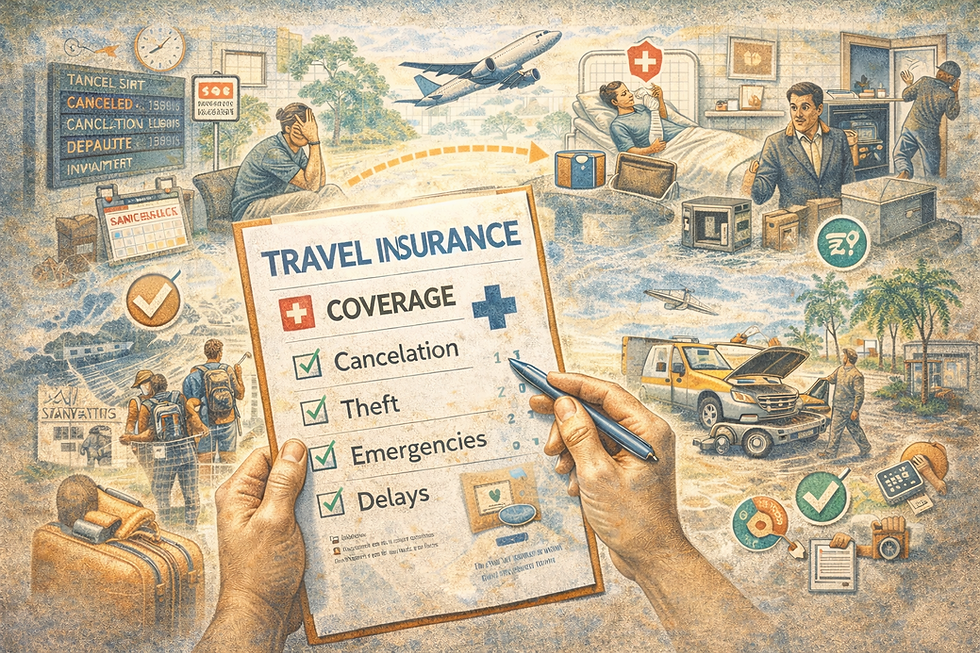
Why people travel has changed, but one thing remains constant: even the best-planned trip can go off track in ways you never expected. Many travellers still think of insurance as something you buy just in case you fall ill abroad, yet its real value goes far beyond medical bills. When you look closely at everything that can go wrong on a journey, you realise that the right cover protects your time, money, and peace of mind just as much as your health.
The misconception around travel insurance
A common belief is that a regular health policy is enough for an international trip. It may cover some medical care in your home country, but it usually does not help if your flight is cancelled, your bags are lost, or you need to cut your journey short. Many people also assume that all travel plans are the same, so they either buy the cheapest option or skip it entirely.
This narrow view leads to two problems. First, travellers either remain under protected or buy a product that does not match their real needs. Second, they only understand the gaps when a claim is denied or a crisis arises, at which point it is too late to fix.
Different types of travel risk beyond health
Health emergencies are only one category of risk you face when you leave home. Delayed or cancelled flights can cause missed connections, extra hotel bills, and rebooked tickets. Airlines can misplace checked luggage, leaving you without clothes, medication, or work tools for days.
There are also trip interruptions due to family emergencies, natural events, or unrest at your destination. Important documents like passports can be lost or stolen, creating extra costs and stress as you work to return home. None of these issues are strictly medical, but they can still disrupt your journey and drain your finances.
How insurance protects finances, not just people
Good cover is designed to absorb the financial shock of these situations. If an unexpected event forces you to cancel, interrupt, or delay your plans, you may be eligible for reimbursement of non-refundable costs such as flights, tours, and hotel bookings. Baggage and personal effects cover helps when your belongings are damaged, lost, or significantly delayed in transit.
Even on the medical side, expenses abroad can be far higher than at home, especially in countries with costly private care. A single hospital visit or emergency evacuation can run into thousands of dollars, which most travellers are not prepared to pay out of pocket. A balanced plan steps in here, turning an unexpected crisis into a manageable claim rather than a long-term debt.
Coverage for cancellations, delays, and losses
One of the most overlooked strengths of a policy is how it deals with timing issues. Trip cancellation features can cover non-refundable costs if you have to call off your journey due to reasons specified in the terms, such as illness, injury, or other covered events. Trip interruption benefits help when you must return home earlier than planned, while delay cover can reimburse extra accommodation and meal costs if a covered delay keeps you stranded.
Baggage cover is another key piece. If checked luggage is lost, damaged, or delayed by an airline, a claim can help replace essentials or reimburse your loss up to the policy limit. Document cover may assist with the costs of replacing a passport or visa, which is particularly important when you are in a foreign country with strict entry rules.
Many people first explore travel insurance online to compare how different plans treat these specific situations before choosing one that fits their travel pattern.
Emergency support services travelers overlook
Money alone is not always enough in an emergency; you also need practical help. Most comprehensive plans include access to a 24/7 assistance service that can guide you to nearby hospitals, arrange translations, or help coordinate an evacuation if necessary. In a stressful moment, having someone to call who understands local systems can make a major difference.
These assistance centres can also advise you on what paperwork to collect at the time of the incident, which simplifies the claim process later. They may support you in replacing lost documents or in arranging alternative transport when original travel plans fall apart. This service element is often hidden in the small print, yet it is one of the features travellers value most after a real-life incident.
When insurance becomes critical rather than optional
There are certain situations were going without cover is particularly risky. Trips that involve countries with very high medical costs, remote locations with limited facilities, or adventure activities such as skiing and diving all carry elevated risk. For long stays, student exchanges, or work assignments abroad, the cumulative chance of something going wrong also increases.
Families travelling with children, senior citizens, or travellers with existing health conditions should be especially careful. For them, a medical emergency can be more likely, and the associated costs higher. In these scenarios, a robust travel insurance plan is less a nice-to-have and more a core part of trip planning.
Choosing coverage based on trip type
Not every journey needs the same level of protection, which is why providers offer different formats. Single-trip plans work well for one-off holidays or short business visits, while multi-trip or annual options suit frequent travellers who fly several times a year. There are also specialised products tailored to students, families, or senior travellers, each with benefits that match likely needs.
When selecting a plan, it helps to list the main features that matter most for your route and activities. For example, some travellers may prioritise strong medical and evacuation benefits, while others focus on baggage and delay protection. Reading the schedule of benefits and policy wording closely is essential so you know exactly what is included and what is excluded before you purchase.
How to avoid claim problems
Many claim disputes arise not because the cover is weak, but because the buyer did not understand the conditions. To avoid surprises, declare any pre-existing medical conditions honestly, and check how they are treated under the plan. Always keep copies of receipts, tickets, medical reports, and airline reports such as a baggage irregularity form, as these documents are often required to support a claim.
It is also important to contact the assistance service as soon as something serious happens, instead of waiting until you return home. They can guide you through the next steps and confirm what is covered, which improves the chances of a smooth claim. By combining realistic expectations with careful documentation, travellers can make their protection work as intended when it matters most.
FAQs
Is travel insurance really necessary for short trips?
Even on a weekend trip, things like flight delays, lost baggage, or sudden illness can derail your plans and create unexpected costs. A basic plan can still help recover non-refundable expenses and give you access to emergency assistance if something goes wrong.
Does my regular health insurance cover me abroad?
Many domestic health plans either do not cover treatment outside your home country or offer only limited support. They typically do not include benefits like trip cancellation, interruption, or baggage protection, which are standard in dedicated travel policies.
What is the difference between trip cancellation and trip interruption?
Trip cancellation protects your prepaid, non-refundable costs if you cannot start your journey for a covered reason. Trip interruption applies when you have already begun travelling but need to cut the trip short or make changes due to a covered event.
Are adventure sports covered under standard policies?
Activities such as skiing, trekking, diving, or other adventure sports may be excluded from basic plans or covered only up to certain limits. Travellers who plan to take part in such activities often need an add-on or a specialised policy that clearly lists these sports as covered.
What documents should I keep for a smooth claim process?
You should save medical reports, prescriptions, bills, boarding passes, hotel invoices, and airline documents such as delay or baggage reports. Clear records help the insurer verify what happened and speed up assessment of your claim.
When should I purchase travel insurance for my trip?
It is best to buy cover soon after you make your first major booking, such as flights or hotel reservations. Doing this ensures that cancellation benefits apply from the start of your planning period, not just right before departure.


Comments